



Contents
Scroll to:
https://doi.org/10.23947/2541-9129-2025-9-4-294-304
EDN: RPBVLG
Scroll to:
Introduction. In today's world, fire safety has become a top priority for public administration in every country. The challenges of providing professional fire protection are addressed, among other measures, through the institution of volunteer firefighting both in Russia and abroad. Problems in ensuring the activities of volunteer firefighters are generally quite typical, regardless of the level of socio-economic development of the territory. Thus, in modern conditions in the Russian Federation, there are quite noticeable imbalances in the level of fire safety. These issues are particularly acute for small, remote settlements, where it is quite resource-intensive to maintain professional fire protection. Nevertheless, the principle of equal access and quality of public services is a key component of state policy and regional administration. The activities of volunteer fire brigades play an essential role in the fire safety system in Russia and abroad. However, as practice shows, there is a significant problem of ignorance and, in general, unwillingness of citizens to participate in voluntary fire protection and to assist in the development of this institution. In this regard, this study aims to investigate the role of volunteer firefighting societies (hereinafter referred to as VFFS) and analyze the specifics of their activities abroad in order to identify common practices and assess the perception of this institution by the population.
Materials and Methods. The research plan consisted of two interconnected parts. First, we planned to study the sources devoted to evaluating the role of volunteer firefighters in other countries and analyze the activities of volunteer firefighting organizations in the Russian Federation. Then, we conducted a sociological survey and processed the results. The processing of responses involved summarizing the collected data and identifying the reasons and motives behind the responses received. For the regional part of the study, statistical data on the activities of voluntary firefighting societies and the dynamics of the number of volunteers were analyzed in order to assess the contribution of voluntary firefighting societies to the fire safety system.
Results. It has been revealed that the institute of volunteer firefighters is widespread in the fire extinguishing system both in Russia and abroad. It has been found that approaches to the organization, financing and financial incentives of volunteer firefighters from different countries have both similarities and some differences, including the subjective perception of this institution by the population. It was found that the number of VFFS branches and the participation of VFFS units in extinguishing fires in the Russian Federation have increased significantly in the Russian Federation. This indicates the relevance and effectiveness of their work. An analysis of the distribution of the number of fires by fire extinguishing participants showed that the proportion of volunteer fire brigades participating in firefighting has been growing annually. However, the analysis has also showed a decrease in the overall number of volunteer firefighters in the Udmurt Republic. According to the sociological survey conducted, the vast majority of respondents were generally not ready to participate in voluntary fire protection and assist in the development of this institution.
Discussion. This work has shown that the institution of volunteer firefighters is a highly sought-after and socially significant phenomenon both in Russia and abroad. However, there are clear problems at both the national and regional levels with the organization of the VFFS system itself. Generally, the population is not very willing to join volunteer firefighting groups, and the reasons why people do not join these groups have been identified. The analysis revealed the motivations and conditions under which respondents were willing to participate in volunteer firefighting activities. The results show the need for a comprehensive approach to developing measures to improve the status of volunteers. It is also necessary to develop a set of measures to increase the appeal of the image of a volunteer firefighter to attract young people into this field.
Conclusions. The research confirms the important role of volunteer firefighters in ensuring fire safety in the subject area under study, both in Russia and abroad. The review showed that the key problems in organizing the work of voluntary firefighting services are identical for most countries. These conclusions are supported by the results of the analysis. The main results of the study include data on the dynamics of the number of volunteers in the region as well as factors that determine the motivation of the population to participate in volunteer firefighting activities. The practical significance of the research lies in its application in predicting additional measures to attract more volunteers to volunteer firefighting organizations. Further research will aim to develop mechanisms to promote volunteer firefighting activities.
Shirobokov S.V., Kasatkina E.A. Research on the Activities of Voluntary Firefighting Societies (Using the Example of the Udmurt Republic). Safety of Technogenic and Natural Systems. 2025;9(4):294-304. https://doi.org/10.23947/2541-9129-2025-9-4-294-304. EDN: RPBVLG
Introduction. In modern conditions, the Russian Federation, due to objective factors, is characterized by significant regional imbalances and differentiated conditions for the development of many spheres of public life. At the same time, the principle of equal accessibility and equal quality of social services remains crucial in the state policy and regional governance. In particular, this applies to fire safety guarantees. As the authors note, “ensuring the required level of fire safety is one of the most important components of the country's national security” [1]. Therefore, in modern Russia with its diversity, the activities of volunteer fire departments play a crucial role in the fire safety system [2]. In this context, studies of the factors determining the expediency of creating voluntary fire protection units in populated areas are relevant [3]. Let us agree that “the regulation of legal relations between state authorities, local governments, organizations and citizens in the field of voluntary fire protection is an essential part of the development and modernization of the regulatory frameworks” [4]. This process has been facilitated by the establishment of a modern legal basis for public administration [5].
The practice of interacting with representatives from various fields allows us to assume that a significant problem today is the lack of knowledge and, in general, the reluctance of citizens to participate in volunteer fire protection and contribute to the development of this institution. A similar trend is also reflected in the experience of volunteer firefighters in several foreign countries.
The aim of this research is to examine the activities of voluntary firefighting societies (VFFSs) and to consider their specific functioning in other countries in order to gain a comprehensive understanding of their role in improving fire protection for the population. More specifically, the study focuses on analyzing the role of VFFSs and how they are perceived by different social groups.
Materials and Methods. The study analyzed sources on the role of volunteer firefighters in foreign countries [1–3]. The study of the specific features of VFFS functioning in a particular region was based on the analysis of data on the activities of voluntary firefighting societies, with the identification of trends in the number of volunteers [4][5]. A sociological survey was conducted to assess the attitudes of the population towards the institution of volunteer firefighters, the level of awareness about their activities, and their perception of the practice of VFFS financing [6]. The work employed the method of content analysis, statistical methods, and methods of sociological survey, with subsequent processing of the obtained results [7][8]. Processing of responses involved generalizing data, interpreting the identified patterns, and establishing causally motivated factors that determined the respondents' positions [9].
Content analysis of publications covered the materials on the role of volunteer firefighters and the specifics of organizing their activities in foreign countries. The sample included works that contained information on the state, specific features and problems of organizing volunteer firefighting activities. The mechanism for attracting volunteers is widespread in firefighting systems both in Russia and abroad. The institution of volunteer fire protection has been historically present in almost all countries, and publications on this topic are widely represented in scientific literature. An overview of the subject area reflecting the special role of volunteer firefighting units in the firefighting system was presented in [6–10].
A comprehensive overview of the organization of volunteer firefighters in foreign countries, such as the USA, France, Germany, Italy, Hungary, was presented in [11][12]. At the same time, most of the review publications were focused on studying the experience of Western European countries, while the activities of volunteer firefighters in the Asian region remained without detailed consideration. Meanwhile, the available reviews of scientific articles revealed the specific organization of voluntary fire protection in these states. Thus, the Chinese volunteer fire department system stood out for its high level of public involvement: “everyone knew what to do in an emergency situation, despite the fact that there was no question of any reward or financial reward. The Chinese still had a very strong sense of social duty” [12]. In Japan, volunteer fire brigades were largely formed from the rural population — these were well-trained citizens who were able to professionally cope with their tasks [13].
The analyzed studies emphasized the significant role of volunteer firefighters not only in extinguishing fires, but also in conducting rescue operations in emergency situations.
In the Russian Federation, there has been a growing interest in volunteerism since the end of the 20th century. This was due to the need to address a number of social issues caused by economic factors [14].
According to Clause 2 of Article 10 of Federal Law No. 100 FZ dated May 06, 2011 “On Voluntary Fire Protection”, individuals who have reached the age of eighteen and are physically able to perform duties related to participation in fire prevention and (or) fire extinguishing, as well as in emergency rescue operations, can become voluntary firefighters. The state “recognizes the legal status and value of the work of VFFS personnel” [15].
Regional (subject) legislation provides for the development of relevant legal acts, which is due, among other things, to “the need to conduct exercises taking into account the local characteristics of the regions” [16]. The Udmurt Republic has Law of the Udmurt Republic No. 30-RZ1 dated June 30, 2011 “On Voluntary Fire Protection in the Udmurt Republic” and Decree of the Government of the Udmurt Republic No. 155 dated April 16, 2012 “On Approval of the Regulations on Granting Subsidies to Public Fire Protection Associations”2.
It should be noted that, in recent years, there have been some difficulties in obtaining digital data due to certain objective reasons. Additionally, the research in this area has been hindered by the lack of a unified database that aggregates information on the activities of organizations involved in emergency prevention and response at various levels. To address this issue, the presented work utilized data from various open sources. The analysis was based on official data from the Ministry of the Russian Federation for Civil Defense, Emergencies and Elimination of Consequences of Natural Disastes3, the Ministry of Emergency Situations of Russia in the Udmurt Republic4, the All-Russian Public Organization “All-Russian Voluntary Fire Organization”5, the Regional Branch of the All-Russian Public Organization “All-Russian Voluntary Fire Organization”6.
Results. According to official materials, by the end of 2023, there were 20,834 registered public fire protection associations on the territory of the Russian Federation.
Public fire protection associations include:
Figure 1 provides the data on the number of fires with the involvement of VFFS units7.
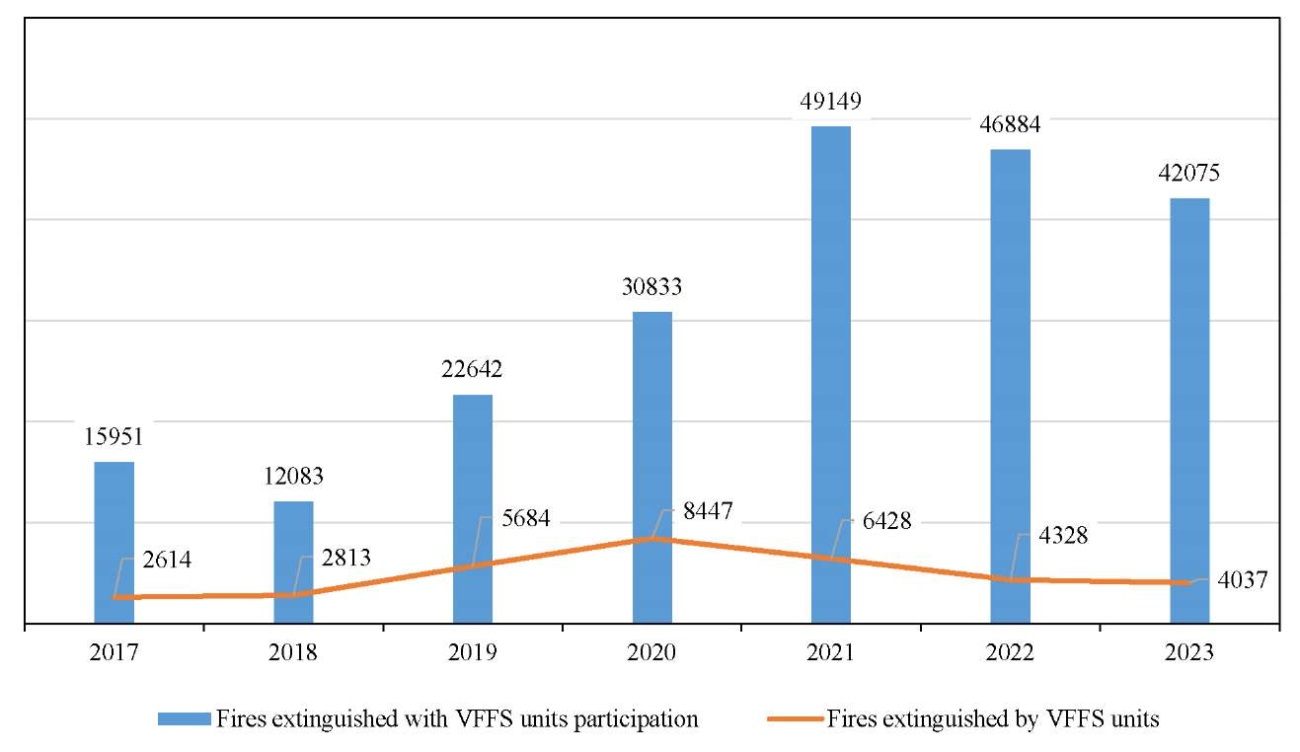
Fig. 1. Participation of VFFS units in extinguishing fires on the territory of the Russian Federation in 2017–2023
Based on the data in Figure 1, we can see that the number of fires extinguished with the assistance of VFFS increased by 33,198 units between 2017 and 2021, or by 208.12%. However, from 2021 to 2023, there was a decrease of 7,074 units, or 14.4%.
The participation of VFFS units in firefighting affected directly the effectiveness in this area as a whole. The more VFFS units there were, the fewer fire losses there were. In the period from 2020 to 2024, the number of VFFS branches increased by 131 or by 23.33%, which indicated the relevance and effectiveness of their activities. The VFFS had its branches in every federal district and almost every region.
State regulation of industry activities was based on the principle of achieving positive results. The effectiveness of fire protection work was assessed based on response time to calls, number of lives saved, and material assets saved [17]. The number of participants in various categories was directly correlated with these indicators. Data analysis showed that the proportion of volunteer firefighters participating in firefighting activities was increasing annually. In 2016, the members of the volunteer firefighting service (VFFS) extinguished 11,594 fires; while in 2022, there were 39,103 (237.3% more) fires. Among all participants in fire extinguishing efforts, the VFFS held the fourth place in terms of proportion. They are inferior only to employees of the territorial divisions of the Federal Fire-Fighting Service of the State Fire Service, as well as employees of the territorial divisions of the Fire-Fighting Service of the subject of the Russian Federation, for whom fire extinguishing was a direct professional field of activity.
According to data for 2024, there were 119 voluntary fire protection public institutions in the Udmurt Republic, which included 436 territorial and facility-based voluntary fire departments with a total number of 4,888 people.
The dynamics of the number of volunteer firefighters in the Udmurt Republic is shown in Table 1.
Table 1
The dynamics of the number of volunteer firefighters in the Udmurt Republic from 2020 to 2024, people
|
Year |
2020 |
2021 |
2022 |
2023 |
2024 |
|
Number, people |
5,234 |
5,457 |
5,683 |
5,206 |
4,888 |
Thus, during the period under review, the number decreased by 346 people, or 6.6%. In accordance with the “Technical Regulations” requirements, 392 settlements of the Udmurt Republic (20%) are covered by volunteer fire departments. At the same time, according to the Ministry of Emergency Situations of Russia in the Udmurt Republic, since the beginning of 2024, volunteers have independently extinguished 13 fires, 435 times participated in extinguishing fires as additional forces and 8 times participated in the elimination of consequences of road accidents8.
Despite the importance and high status of volunteerism, most studies focused primarily on its motivational component. In particular, it was emphasized that “the participation of volunteers in search and rescue activities, extinguishing fires ... was often associated with a risk to the health and even the lives of volunteers, and therefore issues of compensation for damage suffered by a volunteer while performing relevant work were essential for further development” [18]. Modern reviews showed that financial support played a crucial role in ensuring the stability of volunteer firefighting organizations in foreign countries. However, there were also challenges in financing these organizations [19][20]. These challenges were not unique to foreign countries but also affected modern Russia and its regions, such as the Udmurt Republic. This was confirmed by our research. The situation was further complicated by the rather strict requirements for volunteer firefighters, as indicated by research [11][21].
Summing up the results of the analysis, we noted that one of the main problems was the lack of stable positive growth in the number of volunteer firefighters. This decrease in their numbers, despite the high demand for their services, rapid response to fires, and qualified approach to extinguishing fires and saving people and property, was seen as a negative trend that requires close attention. To identify the reasons for this phenomenon and understand the motivational expectations of the population, we conducted a survey as part of this study. We randomly selected a group of respondents from the Udmurt Republic and neighboring regions to participate in the survey.
The results of a social survey on the topic “Voluntary Firefighting Societies in the development of the territory”
Research generally showed the multidimensional nature of the factors affecting the effectiveness of fire protection activities. For example, there have been studies on the influence of the gender factor on professional competencies [22], as well as an increase in the number of women entering professional fields [23]. This article focuses on the subjective aspects that were raised in the survey.
The first set of questions aimed to gather information about the age, gender, and social status of respondents. These results did not need statistical analysis. However, we noticed that the sample included a diverse range of participants (Fig. 2).
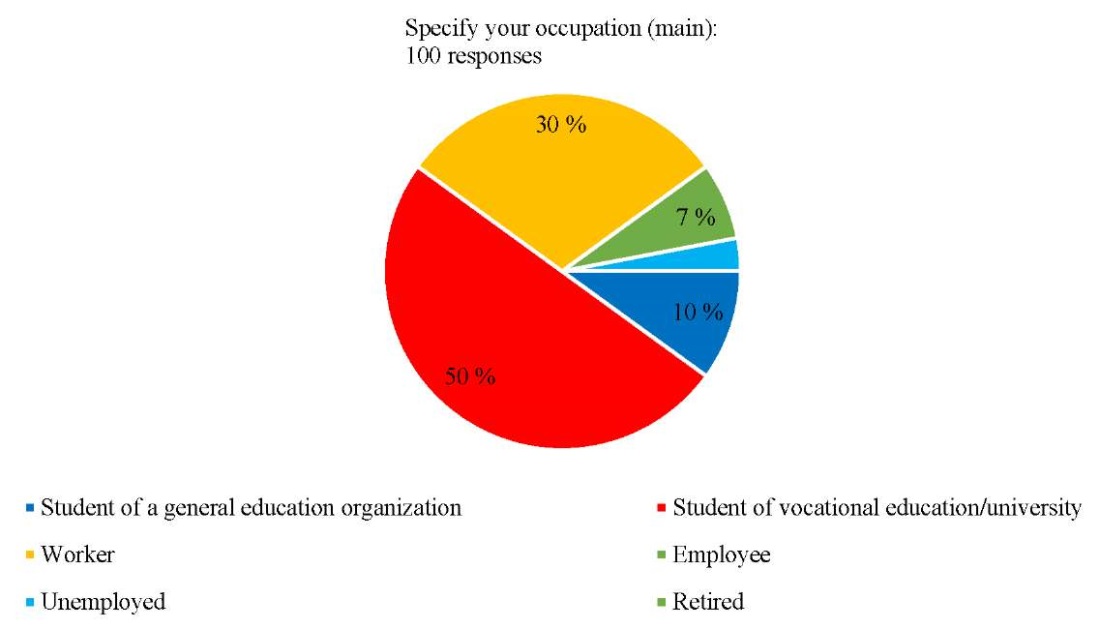
Fig. 2. Distribution of respondents by occupation
It was found out that among 100 respondents, 34% (34 people) were aware of the VFFS existence, and 66% (66 people) were unaware of its existence (Fig. 3).
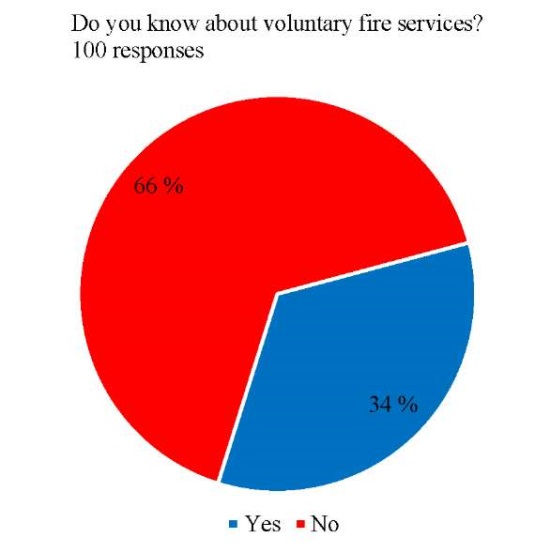
Fig. 3. Data on the number of respondents who have information about the VFFS activities
Ninety people answered positively to the question “Do you think we need a VFFS?”, and ten people answered “No”. Based on this, we could say that most people believe that VFFS was needed (Fig. 4).
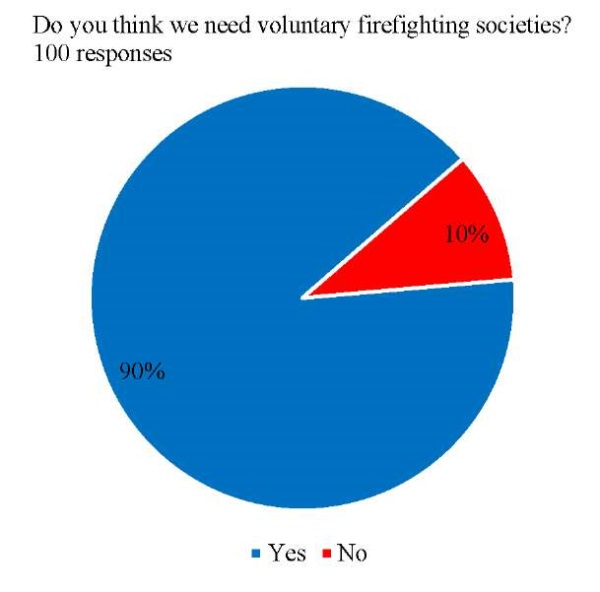
Fig. 4. Distribution of answers to the question about the need for VFFS
Despite the widespread recognition of the importance of volunteer firefighting societies, not all respondents were ready to join their ranks. 86% of respondents (86 people) were not ready to become volunteer firefighters, while only 14% (14 people) expressed their willingness to join.
A key set of questions concerned the respondents' willingness to join VFFSs and the conditions under which they would be willing to do so. Most of the positive responses (27.3% each) suggested joining only if a number of conditions were met — if the organization provided necessary training and equipment, medical protection and compensation for time spent, and if their skills and abilities would contribute to saving lives and property in emergency situations. The remaining answers were within an acceptable margin of error — free of charge, in their free time, at pre-arranged times, friendly team, acceptable conditions while traveling, benefits and incentives, limitation of hours worked per week, provided they did not participate personally in firefighting.
Regarding indirect forms of participation or assistance in the activities of voluntary firefighting societies, it was found that almost half of the respondents (46.7%) were unwilling to help voluntary firefighting societies in any way; almost a third (26.7%) were ready to assist in finding resources and information; only 3.3% were ready to financially support the activities of voluntary firefighting societies.
Obviously, the issue of financing was one of the main topics discussed in the context of the study. Nearly half of the respondents (43.3%) believed that VFFSs should be funded exclusively by the state; a slightly smaller number (26.7%) supported a mixed model, with both the state and the public contributing.
As part of the study, we also attempted to identify the reasons that prevent people from participating in VFFSs. The respondents were able to choose several options for this question or provide their own response. Their answers were distributed as follows:
Other answers that scored less than 5% each: I don't want to; I don't know where to look for a society to join; I don't know the requirements for participating in a voluntary fire society; lack of information about the organization as a whole; health status; I support another charity; I believe that this is primarily a male role; I am in another city; lack of physical fitness.
The final question was an open question: “What changes or improvements would you propose for the development of voluntary firefighting societies?” Constructive proposals were received: to strengthen the advertising campaign to attract volunteers; to give more coverage to the activities of the VFFSs in the media to inform the public; to encourage participants; to provide uniforms, transport and specialized equipment; to discuss this topic from childhood. A small part of the respondents believed that it was impossible to motivate a person without internal motivation.
There is no doubt that professional firefighters and volunteers cannot be compared. As noted in [24], there are situations “that are not within the scope of the systematic activities of civilian volunteers”. Perhaps it is reasonable and beneficial from the point of view of involving the public in the opinion that “the training of volunteers to perform tasks not related to emergency rescue operations can be limited to briefings” [25].
The right solution to the tasks is possible with a balance of authority and responsibility. On the one hand, residents “with the organizational and financial support of government agencies can successfully protect their small homeland from fires” [26]. On the other hand, it is necessary to improve “motivational tools that can encourage citizens to become volunteers” [27]. In addition, volunteer actions [28], mentoring as the most important tool for personal and professional growth [29], as well as government support for active citizenship play a special role in attracting people to VFFSs activities.
Discussion. The conducted research has shown that the institution of volunteer firefighters is in demand and socially significant both in Russia and abroad. However, there are challenges at both the national and regional levels in the organization of the VFFS system. The findings indicate the need for an integrated approach to the development of measures to enhance the status of volunteer firefighters. It is also necessary to develop measures to increase the attractiveness of the image of a volunteer firefighter to attract young people. Regarding the region under study, the study demonstrated that, despite the crucial role of VFFSs in the development of territories, there were several areas that needed improvement. The survey revealed that the majority of respondents recognized the importance of vocational training and considered them necessary for the successful socio-economic development of territories, but the level of public engagement remained low.
Conclusion. The survey revealed that the majority of respondents recognized the importance of vocational training and considered them necessary for the successful socio-economic development of territories, but the level of public engagement remained low. The study found that the general public was not inclined to join the ranks of volunteer firefighters. The main reasons for this unwillingness included the lack of free time, insufficient training or age, and weak financial motivation. The analysis also allowed us to identify the motives and circumstances under which respondents were more likely to participate in volunteer firefighting activities. Some of the respondents expressed interest in joining if they received decent pay and had a schedule with weekends at their main job.
1. On Voluntary Fire Protection in the Udmurt Republic. Law of the Udmurt Republic No. 30-RZ dated June 30, 2011. GARANT system. (In Russ.) URL: https://base.garant.ru/15745029/ (accessed: 20.10.2025).
2. On Approval of the Regulations on Granting Subsidies to Public Fire Protection Associations. UR Government Resolution No. 155 dated April 04, 2012. GARANT system. (In Russ.) URL: https://base.garant.ru/15751256/ (accessed: 20.10.2025).
3. Official website of The Ministry of the Russian Federation for Civil Defence, Emergencies and Elimination of Consequences of Natural Disasters. (In Russ.) URL: https://mchs.gov.ru (accessed: 10.06.2025).
4. Official website of the Main Directorate of the Ministry of Emergency Situations of Russia in the Udmurt Republic. (In Russ.) URL: https://18.mchs.gov.ru (accessed: 20.10.2025).
5. Official website of the All-Russian Voluntary Fire Organization. (In Russ.) URL: https://vdpo.ru (accessed: 20.10.2025).
6. Id.
7. Analysis of the Development of Voluntary Fire Protection in the Russian Federation by the End of 2023. Moscow: 2024. 6 p. (In Russ.) URL: https://mchs.gov.ru/uploads/document/2025-02-04/43e5a62d9d6f39c244d6bd6f7cb1ef41.pdf?ysclid=mha4bes5qv305014601 (accessed: 20.10.2025).
8. Results of the Development and Activity of Volunteerism in Udmurtia in 2024. Official website of the Main Directorate of the Ministry of Emergency Situations of Russia in the Udmurt Republic. (In Russ.) URL: https://18.mchs.gov.ru/deyatelnost/press-centr/novosti/5441040 (accessed: 20.10.2025).
1. Kalach AV, Kapustin AA, Shavaleev MR. Analysis of the Situation with Fires and Their Consequences on the Territory of the Russian Federation. Fires and Emergencies: Prevention, Elimination. 2024;(3):142–152. (In Russ.) https://doi.org/10.25257/FE.2024.3.142-152
2. Musienko TV, Lukin VN, Vinogradov VN, Vikulov SF, Bardulin EN. Voluntary Fire Protection: History and Modern Times. Monograph. Series: “Voluntary Fire Protection: Age-Old Traditions”. Saint Petersburg: Saint Petersburg University of the State Fire Service of the Ministry of Emergency Situations of Russia; 2022. 304 p. (In Russ.)
3. Ratnikova OD, Bobrinev EV. Elaboration of Feasibility Criteria for Establishing Volunteer Fire Service Divisions. Fire Safety. 2024;(1(114)):65–73. (In Russ.) https://doi.org/10.37657/vniipo.pb.2024.114.1.008
4. Gavriushenko VP, Volodchenkova VV. Certain Issues of the Implementation of the Legal Status of the Personnel of the Volunteer Fire Department. Siberian Fire and Rescue Bulletin. 2024;(2(33)):58–65. (In Russ.) https://doi.org/10.34987/vestnik.sibpsa.2024.22.47.019
5. Lukin VN, Musienko TV. Fire Safety Management in a Crisis (from the Experience of the All-Russian Voluntary Fire Society). Credo New. 2022;(4(112)). (In Russ.) URL: https://credo-new.ru/archives/2823 (accessed: 26.11.2025).
6. Ratnikova OD, Matorina OS, Meretukova OG. Review of Organizational and Methodological Approaches to Interaction and Involvement of Volunteers in Activities in the Field of Fire Safety and Assistance to the Population of Germany. Sociology and Law. 2022;14(3):354–364. (In Russ.) https://doi.org/10.35854/2219-6242-2022-3-354-364
7. Raikova YuA, Shaposhnik DS, Stolyarov DV. The System of Professional Training of Volunteer Firefighters: Experience, Problems, Development Prospects. Vestnik Nauki. 2020;3(9(30)):21–31. (In Russ.) URL: https://www.вестник-науки.рф/article/3603 (accessed: 26.11.2025).
8. Gurev AS, Kobyak VV, Korneychuk ON. On the Creation of Voluntary Fire Brigades in the Republic of Belarus. Emergency Situations: Prevention and Elimination. 2014;(1(35)):15–29. (In Russ.)
9. Savenkova IV, Morev AA. History and Current Status of Firefighting in Northern Kazakhstan. Modern Scientific Researches and Innovations. 2011;(2). (In Russ.) URL: https://web.snauka.ru/issues/2011/06/756 (accessed: 26.11.2025).
10. Teemu Veneskari, Alimova GR, Il'nickiy SV. Opyt Podgotovki Dobrovol'nyh Pozharnyh v Oblasti Preduprezhdeniya Pozharov i Provedeniya Profilakticheskih Meropriyatiy v Finlyandskoy Respublike. Monitoring and Expertise in Safety System. 2018;2018(3):40–42. (In Russ.) URL: https://journals.igps.ru/ru/storage/viewWindow/122118 (accessed: 26.11.2025).
11. Malysheva IS, Drobushko AG. On the Issue of Voluntary Fire Protection Activities Abroad. Safety Issues in the Aftermath of Emergencies. 2016;(1–2(5)):295–297. (In Russ.)
12. Gubanova OA. Foreign Experience in Training Firefighters. Vestnik Saint-Petersburg University of State Fire Service of EMERCOM of Russia. 2018;2018(2):169–174. (In Russ.) URL: https://journals.igps.ru/ru/nauka/article/68504/view (accessed: 26.11.2025).
13. Vinogradov VN. Stories from the Fire of Japan. Psychological and Pedagogical Problems of Human and Social Security. 2013;(3(20)):62–68. (In Russ.)
14. Utkin NI, Cheboksarov PA. Volunteer Fire Protection in Russia: The Main Vectors of State and Legal Support and Development of Private Initiative. Legal Policy and Legal Life. 2015;(4):76–84. (In Russ.)
15. Zvenigorodskaya NF. To the Question of Voluntary Fire Protection. Vestnik of Saint Petersburg Juridical Academy. 2017;(2(35)):36–39. (In Russ.)
16. Matorina OS, Streltsov OV, Nesterova SV. Legal Regulation of Labor Protection in Fire Brigades. Sociology and Law. 2025;17(2):288–295. (In Russ.) https://doi.org/10.35854/2219-6242-2025-2-288-295
17. Matorina OS, Udavtsova EYu, Shavyrina TA. Justification of Performance Indicators of Fire Departments for Organizations. Current Fire Safety Issues. 2024;(4(22)):32–37. (In Russ.) https://doi.org/10.37657/vniipo.avpb.2024.50.10.004
18. Ayubov EN, Buevich OE, Gavryushenko VP, Novikov ON, Peregudova NV. Volunteer Activities Development in the Field of the Population and Territories Protection from Emergency Situations, Ensuring Fire Safety and Water Safety of People. Tekhnologii Grazhdanskoi Bezopasnosti. 2023;20(3(77)):75–80. (In Russ.) https://doi.org/10.54234/CST.19968493.2023.20.3.77
19. Mashtakov VA, Bobrinev EV, Udatsova EYu, Matorina OS. Research of Activity of Voluntary Fire Protection in the Russian Federation and Foreign Countries. Sovremennye Problemy Grazhdanskoi Zashchity. 2019;(3(32)):5–13 (In Russ.)
20. Moffitt TJ. Difficult Shortages of Volunteer Firefighters in the US and Canada – Recruitment Crucial for Wildfire Fighting. URL: https://ctif.org/news/difficult-shortages-volunteer-firefighters-us-and-canada-recruitment-crucial-wildfire-fighting (accessed: 26.11.2025).
21. Von Meck DA. Firefighting Volunteerism Abroad. Bulletin of the Ministry of Emergency Situations. 2011;(4):1. (In Russ.) URL: https://fire.ru/pojarnoye-dobrovolchestvo-za-rubejom-vestnik-mchs-2011 (accessed: 26.11.2025).
22. Romanyuk EV, Sibiryakov MV. Formation of Professional Competencies in Higher Education Institutions of Fire-Technical Profile, Taking into Account Gender Characteristics. Fires and Emergencies: Prevention, Elimination. 2024;(1):100–108. (In Russ.) https://doi.org/10.25257/FE.2024.1.100-108
23. Kubu CS. Who Does She Think She Is? Women, Leadership and the ‘B’(ias) Word. The Clinical Neuropsychologist. 2017;32(2):235–251. https://doi.org/10.1080/13854046.2017.1418022
24. Yanitsky ON. Volunteering in the Critical Situations (the CS): Some Theoretical and Organizational Issues. Official Portal of the Federal Research Sociological Center of the Russian Academy of Sciences. 2019;7. (In Russ.) URL: https://www.isras.ru/files/File/publ/Yanitsky_Volontery_v_chs_2019.pdf (accessed: 20.10.2025).
25. Ayubov EN, Buevich OE, Novikov ON, Peregudova NV. Main Aspects of Attracting Volunteers in Emergency Response. Tekhnologii Grazhdanskoi Bezopasnosti. 2023;20(1(75)):99–106. (In Russ.) https://doi.org/10.54234/CST.19968493.2023.20.1.75
26. Luginov RR. Problems Development of Voluntary Fire Protection. StudNet. 2020;3(12):1448–1459. (In Russ.)
27. Aksenov SG, Kildibaev RM. The Development of Voluntary Fire Protection in the Russian Federation. Nauchnyi Aspekt. Tekhnosfernaya Bezopasnost'. 2024;(5):1. (In Russ.) URL: https://clck.ru/3QWoXp (accessed: 26.11.2025).
28. Kasatkina EA. Voluntary Fire Companies and Their Role in the Socio-Economic Development of the Region. Nauka Udmurtii. 2024;(4(107)):29–37. (In Russ.) URL: https://snioo.ru/izdat.html (accessed: 26.11.2025).
29. Turner-Moffatt C. The Power of Mentorship: Strengthening Women in Professional Leadership Roles. Professional Safety. 2019;64(8):17–19.
Sergey V. Shirobokov, Cand. Sci. (Eng), Associate Professor, Head of the Department of Protection in Emergency Situations and Risk Management
ElibraryID: 111113
ResearcherID: M-8277-2014
1, Universitetskaya Str., Izhevsk, 426034
Elena A. Kasatkina, Cand. Sci. (Economics), Associate Professor of the Department of Public Service and Personnel Management
ElibraryID: 831498
1, Universitetskaya Str., Izhevsk, 426034
The study highlights the crucial role of volunteer firefighters in the fire protection system. It proposes a comprehensive approach to assessing the work of voluntary firefighting societies. The research shows the increasing contribution of volunteer firefighters to fire extinguishing at the national level.
The study identifies the motivations and barriers that influence citizens' participation in voluntary firefighting societies. These findings can be used to develop strategies to attract more volunteers. The results are relevant for regional management and fire safety development.
Shirobokov S.V., Kasatkina E.A. Research on the Activities of Voluntary Firefighting Societies (Using the Example of the Udmurt Republic). Safety of Technogenic and Natural Systems. 2025;9(4):294-304. https://doi.org/10.23947/2541-9129-2025-9-4-294-304. EDN: RPBVLG



 Email this article (Login required)
Email the author (Login required)
Email this article (Login required)
Email the author (Login required) Safety of Technogenic and Natural Systems
eISSN 2541-9129
Contact with: Publisher / Editorial Office of the Journal
Publisher: Don State Technical University - DSTU, Rostov-on-Don, Russia - https://donstu.ru/en/
Editor-in-Chief: Meskhi Besarion Chokhoevich, Doctor of Technical Sciences, Professor (Rostov-on-Don, Russia)
Don State Technical University
1, Gagarin Sq., Rostov-on-Don, 344003, Russia
tel.: +7 (863) 2738-372, e-mail: btps@donstu.ru
1, Gagarin Square, Rostov-on-Don, 344003, Russian Federation, Don State Technical University
Processing of personal data


