Contents
Scroll to:
https://doi.org/10.23947/2541-9129-2026-10-3-193-205
EDN: TEIWAE
Scroll to:
Introduction. Vibration in multi-purpose drilling-milling-boring machines affects equipment reliability, production noise levels, and operator safety. Literature discusses sources of vibration, damping mechanisms, and methods for measuring vibration characteristics, while regulatory documents establish permissible levels of vibration acceleration and vibration velocity. However, the frequency dependencies of vibration energy loss factors for individual machine components, which are necessary for engineering vibration forecasting, remain insufficiently studied. The aim of this research is to evaluate vibration energy loss factors in the components of multi-purpose drilling-milling-boring machines and analyze their effect on the level of vibration affecting the operator, thereby substantiating measures to improve occupational safety. The objectives included conducting octave-band measurements, performing regression analysis of the data, and selecting relationships with the lowest standard deviation.
Materials and Methods. This study utilized an integrated approach combining experimental measurements and mathematical data processing methods. Experiments were conducted on a dedicated test bench and directly on the machine using a torque hammer to excite vibrations. Vibration acceleration was recorded in octave frequency bands using modern measuring equipment. Vibrational energy loss coefficients (η) were calculated using a modified formula that took into account vibration acceleration levels. To summarize the experimental data and construct predictive models, regression analysis was used, including approximation by nonlinear functions and polynomials of varying degrees. The quality of the approximation was assessed using the minimum standard deviation criterion.
Results. It was experimentally established that the loss coefficients for cast iron housing parts in the frequency range from 125 to 8000 Hz varied within the range of (7.8–8.8) ·10–3, demonstrating a weak frequency dependence. For engineering calculations, constant value of η ≈ 8·10–3 could be adopted. Regression analysis revealed that the best approximating relationship for the gearbox housing was a sixth-order polynomial. Specific relationships were obtained for the cutting units: for boring and drilling, the best fit was provided by a seventh-order polynomial, and for the milling unit, by a fifth-order polynomial. The resulting mathematical models accurately described the behavior of loss coefficients within the studied frequency range.
Discussion. The analysis of the results confirmed that the dissipative properties of machine structural elements were not constant and depended significantly on the type of technological operation and frequency range. The identified analytical relationships allowed us to move from point estimates at fixed frequencies to continuous energy loss prediction, which was critical for analyzing the dynamic behavior of the machine at its natural frequencies. This opens up opportunities for targeted design. Knowing the frequency spectrum of the most hazardous vibration modes, we can optimize damping specifically in these areas. For example, we can select materials with increased internal friction, or use composite vibration-absorbing coatings in specific structural areas.
Conclusion. This study provides tools for quantitative assessment of vibrational energy loss coefficients for the main vibration sources in multi-purpose machine tools. The potential practical significance of this work lies in the possibility of using the derived regression relationships to develop active and passive vibration control algorithms, design damping systems, and select materials. Implementation of these findings will reduce noise and vibration levels in work areas, minimize the risk of occupational illnesses for operators, and improve overall occupational safety. Additionally, it will extend equipment life by reducing the vibration loads on components. The practical significance of this work lies in its potential for use in developing vibration control algorithms, which will significantly reduce noise levels in work areas.
Grichishin M.V., Meskhi B.Ch. The Impact of Assessing the Vibrational Energy Loss Coefficients of Multi-Purpose Machines on Occupational Safety. Safety of Technogenic and Natural Systems. 2026;10(3):193-205. https://doi.org/10.23947/2541-9129-2026-10-3-193-205. EDN: TEIWAE
Introduction. The vibration of drilling-milling-boring machines has a significant impact on the reliability of equipment, the accuracy of machining, noise levels, and the safety of the operators’ working conditions [1]. An analysis of failures in CNC metal‑cutting equipment has shown that up to 30–40 % of unscheduled stops are due to the degradation of spindle units and bearing supports, which develop under increased vibration loads, and the costs of repairing a spindle unit account for a significant share of the equipment’s cost [2]. An increase in oscillation amplitude in the cutting zone by tens of percent leads to an increase in surface roughness by one to two classes, and a reduction in tool life by 1.5–2 times. This directly affects production costs. In the structure of occupational diseases in mechanical engineering, vibration-related illness consistently ranks among the leading causes. Its share in the number of newly identified occupational diseases in the industry, according to various estimates, is between 15 and 25%.
A distinctive feature of multi‑purpose machines is the wide range of operating rotation speeds, cutting modes, and types of operations. This determines the complex and varied nature of the generation and transmission of vibrational energy within the structure, making the use of general vibration protection systems more difficult.
Vibration intensity in a machine tool is determined by the energy transmission, transformation, and dissipation processes in the “machine tool — unit — instrument — workpiece” system. Some of the energy introduced into the system is used for the useful work of cutting, but the excess energy is converted into vibrational processes and is dissipated due to internal friction in materials, guides, bearings, joint damping, and bolted connections, as well as due to the interaction of structural elements with each other. The main sources of vibration excitation include dynamic forces and impact loads during cutting, imbalances in rotating parts, and operations of hydraulic and pneumatic systems. Aerodynamic processes in cooling and chip removal systems also contribute to vibration. The specified factors cause oscillations in the spindle unit, table, bed, and housing parts. The distribution of vibrational energy between these parts depends not only on their mass and stiffness, but also on their dissipative properties, which dynamically change with variations in excitation frequency and processing modes.
A quantitative characteristic of dissipative properties is vibrational energy loss coefficient η\eta, which is related to relative damping by equation η=2ξ and to resonance quality factor η=1/Q. This allows us to determine the ability of different components to dissipate vibrational energy and identify weak points in a structure that are most likely to experience increased vibration and risk of failure [3].
Research into the vibration of metal-cutting machines is progressing in several different directions. One area of focus is related to cutting process stability. Based on the theory of regenerative self‑oscillations, stability diagrams (radar charts) have been constructed that allow for the selection of optimal rotation speed and cutting depth to prevent self-oscillations. These models describe the conditions for emergence of oscillations, but they include the damping level as an integral part of the overall system, without considering the contributions of individual components. The second area of focus involves the work on experimental modal identification of machine tool systems, in which natural frequencies, vibration modes, and damping coefficients are determined using half‑power method, logarithmic decrement of damping, or by measuring the rate of decay of oscillation levels. It has been shown that up to 80–90 % of energy dissipation in the machine tool beds and structural parts occurs at joints and moving interfaces, rather than due to internal friction in the material. The third direction of research includes studies on vibration diagnostics and the standardization of equipment technical condition, focusing on measuring vibration speed and vibration acceleration at control points and comparing them to permissible levels [4].
A common limitation of the research areas listed above is that the assessment results primarily consist of the resulting vibration parameters (amplitude, vibration speed, vibration acceleration, spectrum, and natural frequencies), while loss coefficient η remains either an averaged value across the system or is determined in narrow frequency intervals near individual resonances. This is due to methodological reasons: measuring η over a wide frequency range requires separate excitation and recording of oscillations of specific components under conditions close to the operating ones, while on a running machine the excitation spectrum is non‑stationary and includes the superposition of several sources. As a result, the literature contains virtually no systematic data on frequency dependencies of η for structural parts and cutting units of multi‑purpose machines in respect to various types of machining — boring, drilling, and milling. This, in turn, does not allow for the development of engineering models that predict the level of vibration in the operator’s work area, taking into account the dissipative properties of individual structural elements. This circumstance constitutes a gap in scientific knowledge, which acquires practical significance when referring to the regulatory framework. The current requirements and regulations do not provide the dissipative characteristics of the structure, but rather the final consequence of their operation — the levels of vibration transmitted to the operator. The maximum permissible values of vibration speed and vibration acceleration are established by SanPiN 1.2.3685-21 “Hygienic Standards and Requirements for Ensuring the Safety and (or) Harmlessness of Environmental Factors for Humans”1 and the relevant standards. Thus, the standards indirectly impose the requirements for the minimum necessary damping precisely in those frequency ranges that are most hazardous for the worker. However, it is impossible to move from the regulated vibration levels to the justified requirements for damping in components without knowledge of frequency dependencies of η — that is, without filling in the identified knowledge gap. It is precisely this logical link “dissipative properties of the component — vibration level at the workplace — occupational safety requirements” that defines the goal and objectives of this work. Thus, the aim of the presented research is to assess vibrational energy loss coefficients in the components of drilling-milling-boring machines and to analyze their impact on the vibration levels affecting the operator, in order to substantiate measures to reduce occupational risk and improve workplace safety.
To achieve this goal, we need to solve the following tasks:
Practical significance of this work lies in the fact that the identified frequency dependencies η will make it possible to move from the diagnostic assessment of vibration levels to predicting the vibrational environment at the workplace. This, in turn, will enable us to select vibration-suppression solutions that not only reduce the risk of vibration-related health problems for operators but also increase the service life of equipment.
Materials and Methods. The engineering calculations took into account the vibrational energy loss coefficients, based on the results of the thematic processing of experimental data obtained on a special test bench, which is described in detail in [5]. Vibrations were excited using a special dynamometric hammer [6]. The measurements recorded vibration acceleration levels in the third to ninth octaves at the moment of impact and after three seconds [7].
In the calculations for cast iron body parts, experimental studies were conducted on plates with a thickness of 10–25 mm. These studies showed that the difference in numerical values was not more than 10–12%, which, when converted to vibration levels, amounted to 10lg1.2 = 0.8 dB. The calculation of the vibrational energy loss coefficient was conducted using formula [8]:
 (1)
(1)
Since time (t) was two seconds, relationship (1) took the form:
 (2)
(2)
where Ak and Ai — oscillation amplitudes at the beginning and end of the measurements; fi — oscillation frequencies, Hz; t — time from turning on to turning off the electromagnet, s; Lak and Lai — vibration acceleration levels (dB) at the end and the beginning of the measurement cycle [9].
In practice, it was not the oscillation amplitudes that were measured, but the vibration acceleration levels. Given the characteristics of modern measuring equipment (Ekopfizika, Assistent, and Oktava), it was advisable to measure the octave levels of vibration acceleration [10]. Vibration acceleration was recorded in octave frequency bands using modern measuring equipment, while vibration acceleration levels were determined by the formula:

where acceleration amplitude was determined as α = 3 ⋅ 10–4 ⋅ 100.05La.
Accordingly,  , then relationship (2) took the form:
 (3)
(3)
Thus, vibrational energy loss coefficients (η) were calculated using a modified formula that took into account vibration acceleration levels. For octave bands, the loss coefficients were calculated as follows:
η31,5 = 3,17 ∙ 10–4 ∙ La31,5
η63 = 1,6 ∙ 10–4 ∙ La63
η125 = 8 ∙ 10–5 ∙ La125
η250 = 1 ∙ 10–5 ∙ La250
η500 = 2,1 ∙ 10–5 ∙ La500
η1000 = 1 ∙ 10–5 ∙ La1000
η2000 = 5 ∙ 10–6 ∙ La2000
η4000 = 2,5 ∙ 10–6 ∙ La4000
η8000 = 1,25 ∙ 10–6 ∙ La8000
To summarize the experimental data and build predictive models, regression analysis was used, which included approximation using nonlinear functions and polynomials of various degrees. Using algebraic techniques and variable substitution, these nonlinear functions could be transformed quite easily into a linear form, which allowed obtaining regression coefficients for nonlinear functions using the least squares method. However, for some functions, it was necessary to remember the inverse transformation in order to obtain accurate values for the regression coefficients [11].
Thus, it was possible to obtain a number of different analytical relationships for the same set of data. With the help of computing technology, we calculated the regression coefficients for all possible functions, analyzed their accuracy relative to the original data, and chose the most adequate one. As a measure of the accuracy of analytical dependencies, it was proposed to use a parameter such as the root‑mean‑square deviation:
 (4)
(4)
where n — amount of experimental data; m — polynomial degree;  — function value in the experiment; yi — calculated value based on the obtained dependence. This parameter took into account not only the total deviation but also the polynomial degree, that is, it refined the polynomial influence. By calculating the root‑mean‑square deviation for all analytical dependencies obtained, it was possible to determine the most adequate function based on the minimum value of the parameter. If the calculations of regression coefficients and the root‑mean‑square deviation were accompanied by graphing, the accuracy analysis could be verified visually [12].
Research Results. Table 1 and Figure 1 provide the measurement results for the conditions when the gearbox housing was installed on a bench and on a machine table. It should be noted that when installing the machine on a table, the numerical value of the loss coefficients was 7–8% higher than when installed on the bench, due to different reduced stiffness. Moreover, the difference in the numerical values of the above octaves did not exceed 6%. This circumstance made it possible to use a constant value of the vibrational energy loss coefficient for the convenience of engineering calculations of vibroacoustic characteristics η = 8.5 ∙ 10–3.
Table 1
Experimental data on vibrational energy loss coefficients (η) of the gearbox housing
|
Measurement conditions |
Numerical values of loss coefficients (η ∙ 10–3) in octave frequency ranges (Hz) |
||||||
|
125 |
250 |
500 |
1000 |
2000 |
4000 |
8000 |
|
|
On the special bench |
7.8 |
7.8 |
8.1 |
7.9 |
7.8 |
8.0 |
8.0 |
|
On the machine table |
8.1 |
8.2 |
8.8 |
8.6 |
8.4 |
8.7 |
8.6 |

Fig. 1. Vibrational energy loss coefficients of the gearbox housing
Vibrational energy loss coefficients (η) were calculated using a modified formula that took into account vibration acceleration levels. Regression analysis was applied to generalize experimental data and create predictive models, including approximation by nonlinear functions and polynomials of varying degrees. Visual confirmation of the accuracy analysis was possible if the calculations of the regression coefficients and the standard deviation were accompanied by plotting [13].
The results of calculating the regression coefficients of the gearbox housing for various analytical dependencies presented in Tables 2 and 3, and also in Figures 2 and 3.
Table 2
Results of regression analysis by nonlinear functions
|
Name of the curve |
Equation |
Standard deviation (RMSD) |
|
Exponential |
|
2.11‧10–2 |
|
Power |
|
8.42‧10–3 |
|
Hyperbolic type I |
|
6.51‧10–3 |
|
Hyperbolic type II |
|
4.2‧10–2 |
|
Hyperbolic type III |
|
0.14‧10–2 |
|
Logarithmic |
|
1.82‧10–2 |
|
S-shaped |
|
2.04‧10–2 |
|
Inverse logarithmic |
|
7.5‧10–2 |

Fig. 2. Approximation by nonlinear functions
Table 3
Results of regression analysis by polynomials
|
Degree |
Equation |
RMSD |
|
1 |
|
2.4‧10–2 |
|
2 |
|
7.13‧10–3 |
|
3 |
|
5.4‧10–3 |
|
4 |
|
5.6‧10–3 |
|
5 |
|
4.13‧10–3 |
|
6 |
|
7.8‧10–3 |
|
7 |
|
3.3‧10–3 |

Fig. 3. Approximation by polynomials
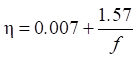
Having analyzed the results, we could conclude that the best analytical relationship was a sixth-order polynomial:
 (5)
(5)
Cutting units during boring and drilling. The results of calculating the loss coefficients of cutting units during boring and drilling operations are presented in Figure 4.

Fig. 4. Coefficients of loss of the cutting units during boring and drilling
The results of the regression coefficients calculation are presented in Tables 4 and 5, as well as in Figures 5 and 6.
Table 4
Results of regression analysis by nonlinear functions
|
Name of the curve |
Equation |
RMSD |
|
Exponential |
|
7.12‧10–3 |
|
Power |
|
3.14‧10–3 |
|
Hyperbolic type I |
|
3.57‧10–3 |
|
Hyperbolic type II |
|
3.34‧10–3 |
|
Hyperbolic type III |
|
1.97‧10–2 |
|
Logarithmic |
|
3.42‧10–3 |
|
S-shaped |
|
9.12‧10–3 |
|
Inverse logarithmic |
|
2.87‧10–2 |

Fig. 5. Approximation by nonlinear functions
Table 5
Results of regression analysis by polynomials
|
Degree |
Equation |
RMSD |
|
1 |
|
4.55‧10–2 |
|
2 |
|
2.52‧10–3 |
|
3 |
|
1.71‧10–3 |
|
4 |
|
1.02‧10–3 |
|
5 |
|
9.06‧10–4 |
|
6 |
|
4.94‧10–4 |
|
7 |
|
2.12‧10–4 |

Fig. 6. Approximation by polynomials
After analyzing the results for the cutting units, it became obvious that the best analytical dependence would be a seventh-order polynomial
 (6)
(6)
Cutting unit during milling. The results of calculating the loss coefficients of the milling unit are shown in Figure 7.

Fig. 7. Loss coefficients of the milling unit
The results of calculating the regression coefficients of the milling unit are presented in Tables 6 and 7, as well as in Figures 8 and 9.
Table 6
Results of regression analysis by nonlinear functions
|
Name of the curve |
Equation |
RMSD |
|
Exponential |
|
1.98‧10–2 |
|
Power |
|
3.05‧10–3 |
|
Hyperbolic type II |
|
3.01‧10–3 |
|
Hyperbolic type I |
|
1.24‧10–2 |
|
Hyperbolic type III |
|
2.98‧10–2 |
|
Logarithmic |
|
8.5‧10–3 |
|
S-shaped |
|
1.22‧10–2 |
|
Inverse logarithmic |
|
4.07‧10–2 |

Fig. 8. Approximation by nonlinear functions
Table 7
Results of regression analysis by polynomials
|
Degree |
Equation |
RMSD |
|
1 |
|
9.1‧10–3 |
|
2 |
|
5.78‧10–3 |
|
3 |
|
3.68‧10–3 |
|
4 |
|
1.97‧10–3 |
|
5 |
|
1.65‧10–3 |
|
6 |
|
1.71‧10–4 |
|
7 |
|
2.15‧10–4 |

Fig. 9. Approximation by polynomials
For the milling unit, the best matching was provided by a fifth-order polynomial
 (6)
(6)
Discussion. The analysis of the research results confirms that the dissipative properties of structural elements of the machine are not constant and significantly depend on the type of technological operation and frequency range. The revealed analytical dependencies make it possible to move from point estimates at fixed frequencies to continuous prediction of energy losses, which is critically important for analyzing the dynamic behavior of the machine at natural oscillation frequencies. This opens up opportunities for targeted design. Knowing the frequency spectrum of the most hazardous vibration modes, it is possible to optimize damping in these areas. For example, we can choose materials with increased internal friction or use composite vibration-absorbing coatings in specific areas of the structure.
Conclusion. The regression analysis allowed us to determine analytical dependencies of the vibrational energy loss coefficients of noise and vibration sources during the operation of drilling-milling-boring machines. These dependencies make it possible to determine the value of the loss coefficient not only at geometric mean frequencies of the octave spectrum, but also at natural oscillation frequencies. Using the equations presented in this paper, we can accurately estimate the amount of vibrational energy losses at various frequencies, which will make it possible to purposefully apply vibration isolation and vibration damping methods. In particular, a more efficient design of damping elements and the choice of optimal materials for the manufacture of mills and other load-bearing structures of machine tools is possible [11]. The results can be useful in creating vibration control algorithms, which will significantly reduce noise and vibration levels in the workplace.
1. SanPiN 1.2.3685-21. Hygienic Standards and Requirements for Ensuring the Safety and (or) Harmlessness of Environmental Factors for Humans. (In Russ.) URL: https://www.consultant.ru/document/cons_doc_LAW_375839/e66874e0ad1f04c3a48e95cd16355056937feded/ (accessed: 10.08.2026)
1. Alekseev MV, Smychok IA, Chukarin AN, Finochenko TA. Analysis of Working Conditions of Employees at Transport Engineering Enterprises. Trudy Rostovskogo Gosudarstvennogo Universiteta Putey Soobseniya. 2024;3(68):6–12. (In Russ.) https://doi.org/10.46973/1818-5509_2024_3_6
2. Mekhi BCh. Improving the Working Conditions of Operators of Metal-Cutting and Woodworking Machines by Reducing Noise in the Working Area (Theory and Practice). Rostov-on-Don: DSTU Publishing center; 2003. 131 p. (In Russ.)
3. Grichishin MV, Chukarin АN. Experimental Studies of the Spectral Composition of Noise during Boring of Drilling-Milling-Boring Machine. Trudy Rostovskogo Gosudarstvennogo Universiteta Putey Soobseniya. 2025;(3):24–32. (In Russ.) https://doi.org/10.46973/1818-5509_2025_3_24
4. Razakov ZhP, Grichishin MV, Finochenko TA, Chukarin AN. Vibroacoustic Dynamics of Gearboxes of Drilling-Milling Boring Machines with Multi-Speed Electric Motors. Noise Theory and Practice. 2022;8,2(29):56–62. (In Russ.) URL: https://clck.ru/3VL4HH (accessed 10.08.2026)
5. Ryzhov SP, Novikov VV, Khozyaev IA, Chukarin AN. Regressive Dependencies of the Coefficient of Loss of Vibrational Energy of the Main Sources of Goothing Machines. News of the Tula State University. Technical Sciences. 2023;(8):398–401. (In Russ.)
6. Chukarina NA, Ruslanov DV, Shamshur SA. Regression Dependences of Vibrational Energy Loss Coefficients of Multilayer Wood Materials. News of the Tula State University. Technical Sciences. 2020;(3):65–71. (In Russ.)
7. Chukarina NA, Motrenko DV. Loss Factor of Vibrational Energy for Different Wood Species. Monitoring. Science and Technologies. 2019;2(40):66–71. (In Russ.) https://doi.org/10.25714/MNT.2019.40.010
8. Shonia DP, Beskopylny AN, Chukarin AN. Determination of Loss Ratio Vibrational Energy for Planing Machine. News of the Tula State University. Technical Sciences. 2024;8:263–268. (In Russ.)
9. Chukarin AN, Fedenko АА, Shashurin AE, Vasilyeva V. Regression Analysis of the Coefficients of Vibration Energy Losses in Gas-Discharge Systems of Power Plants. Akustika. 2021;(41):115–118. https://doi.org/10.36336/akustika202141115
10. Klyuchev VI, Kostin AV, Smirnov AA. Practical Training in Vibration Diagnostics of Machines. Moscow: Mashinostroenie; 2018. 240 p. (In Russ.)
11. Korobov SM, Lukashоnok VB, Sazonova SA, Finochenko TA. Regression Dependencies of the Dissipative Function of the “Table — Workpiece” System of Metal-Cutting Machines of Various Functional Purpose. News of the Tula State University. Technical Sciences. 2026;(2):202–208. (In Russ.)
12. Stuzhenko NI, Sazonova SA, Chukarin AN, Finochenko VA. Assessment of Oscillatory Energy Losses of Spindle Headstocks of Diamond Boring and Grinding Machines. News of the Tula State University. Technical Sciences. 2026;2:244–251. (In Russ.)
13. Ryzhov SP, Soldatov AG, Kharlamov OG, Finochenko TA. Experimental Studies of the Spectral Composition of Vibrations of Goothing Machines. Trudy Rostovskogo Gosudarstvennogo Universiteta Putey Soobseniya. 2024;(4):31–36. (In Russ.) https://doi.org/10.46973/1818-5509_2024_4_31
Maksim V. Grichishin, Postgraduate Student, Rostov State Transport University, Senior Lecturer of the Department of Standardization, Certification and Quality Management, Rostov Branch of the Academy for Standardization, Metrology and Certification
58/173, Sokolova Ave., Rostov-on-Don, 344003
Besarion Ch. Meskhi, Dr. Sci. (Eng.), Professor, Rector
1, Gagarin Sq., Rostov-on-Don, 344003
The losses of vibrational energy in multi-purpose machine units are investigated. Measurements were taken in octave frequency bands, both on the bench and on the machine. It was found that losses in cast-iron housings were weakly dependent on frequency. Accurate regression loss models for different cutting operations were obtained. These models allow predicting vibration and adjusting damping. The results can be used to reduce noise and protect operators' health.
Grichishin M.V., Meskhi B.Ch. The Impact of Assessing the Vibrational Energy Loss Coefficients of Multi-Purpose Machines on Occupational Safety. Safety of Technogenic and Natural Systems. 2026;10(3):193-205. https://doi.org/10.23947/2541-9129-2026-10-3-193-205. EDN: TEIWAE



 Email this article (Login required)
Email the author (Login required)
Email this article (Login required)
Email the author (Login required) Safety of Technogenic and Natural Systems
eISSN 2541-9129
Contact with: Publisher / Editorial Office of the Journal
Publisher: Don State Technical University - DSTU, Rostov-on-Don, Russia - https://donstu.ru/en/
Editor-in-Chief: Meskhi Besarion Chokhoevich, Doctor of Technical Sciences, Professor (Rostov-on-Don, Russia)
Don State Technical University
1, Gagarin Sq., Rostov-on-Don, 344003, Russia
tel.: +7 (863) 2738-372, e-mail: btps@donstu.ru
1, Gagarin Square, Rostov-on-Don, 344003, Russian Federation, Don State Technical University
Processing of personal data